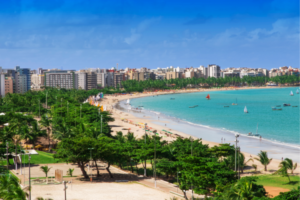

Most travelers who visit Brazil see a very small slice of it. Rio de Janeiro, São Paulo, and maybe a beach in the Northeast, and then they go home convinced they’ve experienced the country. They haven’t. Brazil is the fifth-largest country in the world, and beneath the iconic surface of Carnival, the Christ the Redeemer statue, and the Amazon lies an almost incomprehensible variety of landscapes, cultures, ecosystems, and experiences that the typical tourist never encounters.
The good news for you? That means the best of Brazil is still waiting, largely undiscovered, often uncrowded, and in many cases more extraordinary than the famous destinations that fill the travel brochures.
This guide covers the lesser known places to visit in Brazil that we believe deserve a spot on every adventurous traveler’s itinerary: hidden natural wonders, underrated colonial towns, surreal geological formations, quiet islands, and destinations that offer the kind of raw, authentic Brazil that most visitors never find. Each one is genuinely accessible to international travelers, with the right planning.
Before diving in, two essentials: make sure you’ve checked our guide to travel safety in Brazil and ou rBrazil packing list, both will prepare you for venturing beyond the tourist trail.
🧳 Plan your trip to Brazil
🏨 Hotels: Browse the best hotels on Booking.com
🎟️ Tours & activities: Find tours on Civitatis ·
🚗 Car rental: Compare prices on Rentcars
🛡️ Travel insurance: Get a quote here
Why go off the beaten path in Brazil?
The case for going beyond Rio and São Paulo is simple: Brazil’s most extraordinary places are not its most famous ones. The country contains more biodiversity than any other nation on Earth, spans five distinct climate zones, hosts indigenous cultures that have survived for millennia, and contains natural phenomena, from bioluminescent bays to crystal-clear freshwater rivers in the middle of deserts, that have no equivalent anywhere else on the planet.
There’s also a practical advantage to lesser-known destinations in Brazil: they’re often significantly more affordable, less crowded, and easier to experience authentically. You’ll interact with locals rather than other tourists, eat at family-run restaurants rather than tourist-trap menus, and leave with stories that no one else at home will have heard before.
The question isn’t whether to go off the beaten path in Brazil. It’s where to start.
1. Jalapão, Tocantins, the savanna’s best kept secret
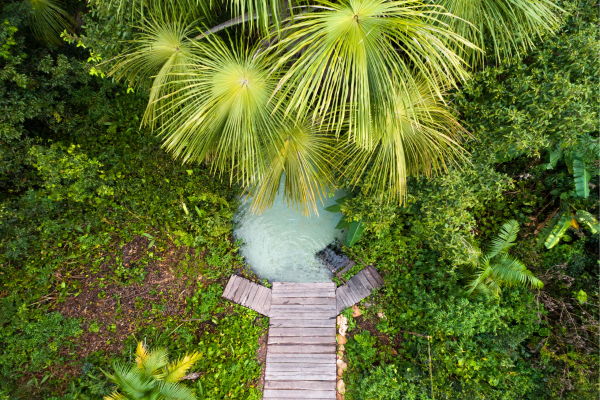
If you’ve never heard of Jalapão, you’re not alone, and that’s exactly the point. Located in the state of Tocantins in central Brazil, Jalapão is one of the most visually extraordinary destinations in the country: a vast, wild cerrado (Brazilian savanna) landscape of enormous orange sand dunes, clear-water rivers, sparkling waterfalls, and the phenomenon that makes it truly unique, the fervedouros.
Fervedouros are underground springs that bubble up through the sand, creating natural pools of crystal-clear water with such powerful upward pressure that you float effortlessly, unable to sink even if you try. They look like something from a science fiction film. The most famous, Fervedouro do Ceiça and Fervedouro da Furna, are surrounded by cerrado vegetation and accessible by 4×4 vehicle and a short hike.
Beyond the fervedouros, Jalapão offers the Cachoeira da Velha waterfall (one of the most spectacular in central Brazil), the Serra do Espirito Santo, a dramatic sandstone massif rising from the plains, and the Duna do Pôr do Sol, where watching the sunset from atop giant orange dunes over an endless cerrado horizon is genuinely life-altering.
How to get there: Fly to Palmas (the capital of Tocantins) and then arrange a 4×4 rental or guided tour for the roughly 200 km drive to the park. The roads are unpaved and require appropriate vehicles, renting a 4×4 in Palmas is essential. Compare car rental rates for your Brazil trip on Rentcars.com and look for 4×4 options available in Palmas.
Best time to visit: May to September (dry season). During the wet season, many roads become impassable.
2. Alter do Chão, Pará, the Caribbean of the Amazon
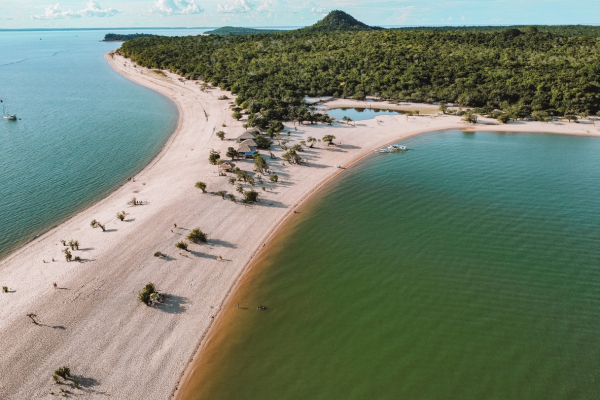
Imagine white sand beaches and crystal-clear turquoise water in the heart of the Amazon Rainforest. That’s Alter do Chão, a small village on the banks of the Tapajós River in Pará state that has been called the “Caribbean of the Amazon,” and the comparison is entirely justified.
During the dry season (July to December), the Tapajós River level drops dramatically, revealing an extensive system of white sand beaches and islands, the most famous being Ilha do Amor (Island of Love), a sand spit in the middle of the river with dazzling clear water on both sides. Swimming in the Tapajós feels like swimming in the sea, except you’re surrounded by Amazon forest rather than salt water.
Alter do Chão is also an extraordinary base for Amazon exploration that’s dramatically less expensive and less crowded than Manaus. River boat tours, jungle hikes, piranha fishing, dolphin watching, and visits to riverside communities are all available from the village. The pace of life here is deeply, deliberately slow, hammocks strung between trees, fresh açaí served in bowls, and the sound of the river at every turn.
The village itself has a strong cultural identity centered on its annual Çairé Festival (held in September), a traditional indigenous celebration that draws visitors from across Brazil.
How to get there: Fly to Santarém (from São Paulo or Belém) and take a 30-minute bus or taxi to Alter do Chão village. No 4×4 required, this is one of the more accessible off-the-beaten-path destinations in Brazil.
Best time to visit: July to December for the beaches and clear water.
3. Chapada dos Veadeiros, Goiás, crystal waters and cosmic energy
Chapada dos Veadeiros is a UNESCO World Heritage Site that most international travelers have never heard of, which is astounding given that it’s one of the most spectacular natural landscapes in South America. Located in the cerrado highlands of Goiás state, about 250 km north of Brasília, the park is centered on the colonial town of Alto Paraíso de Goiás and offers some of the most dramatic hiking, swimming, and nature watching in all of Brazil.
The park sits on one of the world’s largest deposits of rock crystal (quartz), which locals believe gives the region a particular energy, a claim that has made Chapada dos Veadeiros a center for new age spirituality and holistic tourism. Whether or not you buy into the energy theories, the landscape is genuinely extraordinary: waterfalls cascade into emerald pools, rivers cut through ancient quartz formations, and the cerrado forest explodes with toucans, giant anteaters, maned wolves, and hundreds of bird species.
The main attraction is the waterfall circuit in Chapada dos Veadeiros National Park, a challenging but deeply rewarding hike to multiple falls, including the spectacular Cachoeira dos Couros and the twin São Bento waterfalls. The Valle da Lua (Moon Valley), a few kilometers from Alto Paraíso, features smoothly eroded grey rock formations that look genuinely lunar.
How to get there: Fly to Brasília and rent a car for the roughly 3-hour drive north to Alto Paraíso. A car is strongly recommended for flexibility within the park. Compare car rental rates in Brasília on Rentcars.com.
Best time to visit: May to October (dry season for hiking; many trails close in the wet season).

4. Lençóis Maranhenses, Maranhão, the most surreal landscape in Brazil
No photograph fully prepares you for Lençóis Maranhenses. This national park on the northern coast of Maranhão state is a vast field of brilliant white sand dunes, and between the dunes, from roughly March to September, thousands of freshwater lagoons form, creating an impossible landscape of blue and green pools stretching to the horizon in every direction. It looks like the surface of another planet. It is, in fact, one of the most unique ecosystems on Earth.
Despite its extraordinary beauty, Lençóis Maranhenses remains significantly less visited than it deserves among international travelers, largely because it requires more logistical effort to reach than more famous Brazilian destinations. That’s your advantage: the lagoons at their fullest are genuinely crowd-free compared to the great natural wonders of other continents.
The gateway town is Barreirinhas, reached from São Luís by a 4-hour road transfer. From Barreirinhas, jeep tours access the park’s interior, visiting different lagoon formations depending on the season. The most famous lagoon, Lagoa Bonita, involves a dawn wake-up and a dramatic early-morning light show as the sun rises over the dunes, one of those travel experiences that stays with you permanently.
How to get there: Fly to São Luís, then arrange a transfer or tour to Barreirinhas. Having travel insurance is particularly important for remote destinations like this, SafetyWing offers affordable coverage from ~USD $42/month including medical emergencies anywhere in Brazil.
Best time to visit: July to September (lagoons at fullest; dry season access is reliable).

5. Jericoacoara, Ceará, the dune town that time forgot
Jericoacoara, or “Jeri” as everyone calls it, is a beach destination that operates on entirely different terms from any other coastal town in Brazil. There’s no asphalt. The streets are sand. There are no cars (a few motorbikes and tractors, that’s it). The closest airport is two hours away. Getting here requires crossing dunes by 4×4. And yet, Jericoacoara has become a legend among those who discover it, a beautiful, wind-swept village where kitesurfers fly overhead, the sunset dune fills with people every evening, and the night sky is among the most star-filled in Brazil.
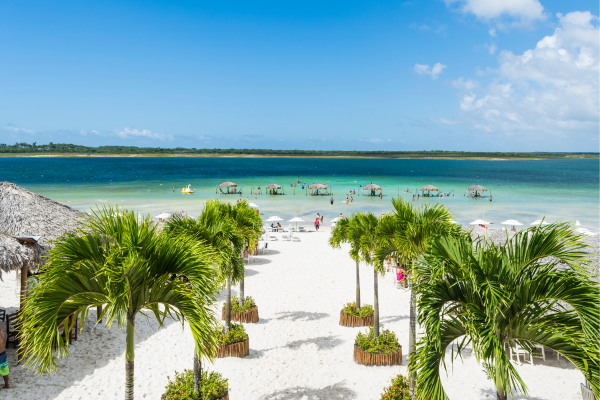
Jeri sits on the Ceará coast in northeastern Brazil, surrounded by a national park of dunes, lagoons, mangroves, and wild beaches. The lagoons around Jericoacoara, particularly Lagoa do Paraíso (Paradise Lagoon) and Lagoa Azul (Blue Lagoon), are famous for their extraordinary clarity and color, and the combination of consistent wind and flat water makes this one of the world’s premier kitesurfing destinations.
The sundown ritual at the Duna do Pôr do Sol (Sunset Dune) is one of those shared human experiences that feels almost ceremonial, every evening, dozens of travelers climb the dune, watch the sun drop into the ocean, and spontaneously applaud. It’s beautiful in the most unironic, genuine way.
How to get there: Fly to Fortaleza, then transfer by bus or 4×4 to Jericoacoara (approximately 4 hours). The final stretch always involves crossing the dunes, there’s no avoiding it, and it’s part of the fun. A good travel insurance plan is essential for the journey. SafetyWing covers adventure activities and remote destination medical care.
Best time to visit: July to January (dry season and peak wind season for kitesurfing).
6. Bonito, Mato Grosso do Sul, the clearest rivers on Earth
Bonito is Brazil’s greatest secret for underwater nature lovers. Located in Mato Grosso do Sul state in central-western Brazil, this small town is the center of a genuinely unique ecosystem: rivers fed by limestone-filtered springs that produce water of supernatural clarity. Swimming in the Rio da Prata or Rio Sucuri here is unlike any freshwater river experience elsewhere on Earth, the visibility extends for dozens of meters, and you float face-down watching an underwater landscape of fish, plants, and rock formations pass beneath you in extraordinary detail.
Everything in Bonito operates on a controlled-access basis to protect the environment, which means all attractions require advance booking through licensed operators. This sounds like a constraint but is actually one of the things that makes Bonito work so well, the experiences are well-managed, guides are knowledgeable, and the environment is genuinely preserved.
Beyond the rivers, Bonito offers the Abismo Anhumas, a spectacular lake inside a cave 72 meters underground, reached by rappelling down a rope and explored by boat, and the Gruta do Lago Azul, a massive cavern containing an extraordinary blue lake at its base. The surrounding Pantanal wetlands offer wildlife watching that rivals the Serengeti: jaguars, giant otters, capybaras, and hundreds of bird species.
How to get there: Fly to Campo Grande, the state capital, and rent a car for the 5-hour drive to Bonito (or take a bus). Having a car in Bonito is recommended for flexibility between attractions. Compare car rental rates in Campo Grande on Rentcars.com.
Best time to visit: July to October (dry season; river visibility is highest when water levels are lower and rainfall minimal).

7. Paraty, Rio de Janeiro, colonial gem between Rio and São Paulo
Paraty is the kind of colonial town that makes you forget you’re in the 21st century. Located on the Costa Verde (Green Coast) of Rio de Janeiro state, roughly 250 km southwest of Rio city, Paraty is a UNESCO World Heritage Site with a perfectly preserved Portuguese colonial historic center, cobblestone streets, whitewashed churches, colorful doorways, and an atmosphere of extraordinary tranquility that feels completely at odds with everything you’ve been told about Brazil.
The historic center of Paraty is entirely pedestrian, no cars permitted within the old town, and the streets are paved with irregular stones deliberately placed to allow the tide to flush them clean twice daily. The surrounding coast is scattered with islands and quiet beaches, accessible only by boat, with water clear enough for snorkeling and an absence of tourist infrastructure that makes each beach feel like a discovery.
Paraty’s cultural calendar includes a world-renowned literary festival (FLIP, Festa Literária Internacional de Paraty), a celebrated cachaça festival (the town is one of Brazil’s oldest and most important cachaça producers), and a lively arts scene that makes it a favorite of Brazilian artists and intellectuals.
The combination of history, nature, gastronomy, and accessibility, it’s only 4 hours from both Rio and São Paulo by bus, makes Paraty an ideal stop for international travelers who want to experience Brazil’s colonial heritage alongside beautiful coastline.
How to get there: By bus from Rio de Janeiro (4–5 hours) or São Paulo (5–6 hours). By car on the BR-101 coastal highway, one of Brazil’s most scenic drives. Compare car rental rates for the coastal route on Rentcars.com.
Best time to visit: Year-round, though outside of the high summer season (December–February) and Carnival for fewer crowds.

8. Serra da Capivara, Piauí, the cradle of the Americas
Serra da Capivara is one of the most significant archaeological sites in the world, and almost no international traveler has it on their itinerary. This UNESCO World Heritage Site in the remote interior of Piauí state contains over 1,300 archaeological sites and more than 30,000 prehistoric rock paintings, some of which may date back 25,000 to 50,000 years, making them potentially the oldest human art found anywhere in the Americas.
The rock paintings document scenes of daily life, hunting, dance, sex, birth, and conflict among the earliest inhabitants of the continent. They’re painted on the dramatic sandstone cliff faces and canyon walls of a spectacular semi-arid landscape, a rugged, beautiful terrain of red rock formations, dry forest, and deep gorges that is fascinating even if prehistory isn’t your primary interest.
Serra da Capivara fundamentally challenges conventional narratives about human migration to the Americas, the dates suggested by some of its archaeological finds predate the Bering Strait migration theory by tens of thousands of years, making this an active site of scientific debate and ongoing research.
The gateway town is São Raimundo Nonato. Access from the outside world requires either a long road journey or a flight to nearby airports.
How to get there: Fly to Petrolina or Teresina, then arrange ground transport. Given the remoteness, guided tours are strongly recommended. Travel insurance is essential for this kind of remote destination, SafetyWing covers you across all of Brazil including remote areas.
Best time to visit: May to September (dry season; walking the trails in the wet season is significantly more challenging).

9. Ilha do Mel, Paraná, the island with no cars
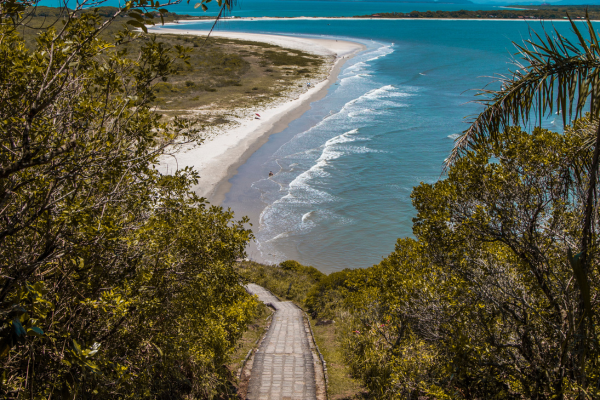
Ilha do Mel (Honey Island) is one of Brazil’s most charming island destinations and one of the least known internationally. Located off the coast of Paraná state in southern Brazil, this small island of only 27 km² has no cars, no paved roads, and no large hotels. Getting here requires a 1-hour boat crossing from the mainland town of Pontal do Paraná.
The island divides naturally into two distinct personalities: Nova Brasília on the northern end is the more active section, with pousadas, restaurants, and beach bars popular with Brazilian backpackers and surfers. Encantadas on the southern end is quieter, more intimate, and surrounded by the most dramatic coastal scenery, rocky headlands, hidden coves, and the famous Gruta das Encantadas (Enchanted Grotto), a sea cave accessible at low tide.
Connecting the two communities is a trail that traverses the length of the island through Atlantic Forest, one of the most pleasant walks in southern Brazil, with panoramic ocean views and regular encounters with the island’s wildlife, including dozens of bird species.
The combination of no-car policy, excellent surfing (at Praia de Fora on the exposed ocean side), pristine forest, and low-key social atmosphere makes Ilha do Mel a perfect antidote to the more developed and crowded beach destinations of southeastern Brazil.
How to get there: Fly to Curitiba, then take a bus or rental car to Pontal do Sul (about 1.5 hours), and then the ferry to the island. No cars are permitted on the island itself. Compare car rental rates in Curitiba on Rentcars.com for the mainland leg of the journey.
Best time to visit: December to March (Brazilian summer, warmest water) or June to September (fewer crowds, cooler weather, good surfing).
10. Vale do Catimbau, Pernambuco, prehistoric paintings in the Caatinga
Vale do Catimbau is one of northeastern Brazil’s most underrated national parks, a dramatic landscape of sandstone mesas, deep valleys, and ancient rock art set within the caatinga biome (the semi-arid scrubland unique to northeastern Brazil). Located in Pernambuco state, roughly 4 hours from Recife, it’s often called a “poor man’s Serra da Capivara”, which is slightly unfair, because Catimbau is extraordinary in its own right.
The park contains thousands of prehistoric rock paintings distributed across hundreds of sites, many of them depicting human figures, animals, and geometric patterns painted in red and yellow ochre. The caatinga landscape itself, sparse, silver-grey, and ancient-looking, creates a striking contrast with the richly colored paintings and the warm tones of the sandstone formations.
The viewpoints at Catimbau are spectacular, particularly at dawn and sunset when the mesas turn golden and the valley below fills with shadow. Guided tours from the nearby town of Buíque access the main trails and rock art sites, and local guides are passionate and knowledgeable about the park’s prehistoric significance.
How to get there: Fly to Recife and rent a car for the 4-hour drive to Buíque. Compare car rental rates in Recife on Rentcars.com. Guided tours are recommended; the park’s signage is limited.
Best time to visit: May to September (dry season; trails are accessible and wildlife is more active around water sources).

11. Marajó Island, Pará, where cowboys ride water buffalo
Marajó Island is one of the strangest and most fascinating places in all of Brazil, and almost no international traveler has ever heard of it. Sitting at the enormous mouth of the Amazon River, Marajó is larger than Switzerland, covered in a mix of rainforest and vast seasonally flooded grasslands, and home to a unique cultural tradition: cowboys (called vaqueiros) who herd cattle from the backs of water buffalo, because only water buffalo are strong enough to navigate the island’s waterlogged terrain.
The island has been inhabited for millennia and is home to the extraordinary Marajoara ceramic tradition, a pre-Columbian culture that produced some of the most sophisticated pottery in pre-contact South America, some of it dating back 2,000 years. The Museu do Marajó in Cachoeira do Arari houses the finest collection.
Wildlife here is extraordinary: capybaras, caimans, manatees, pink river dolphins, scarlet ibis, and hundreds of other species inhabit the island’s wetlands. The pace of life is slow, the environment is wild, and the experience of riding through flooded grasslands on a water buffalo behind a local cowboy is not available anywhere else on Earth.
How to get there: Take a ferry from Belém (approximately 3 hours to Soure, the main town). Belém is connected by direct flights to São Paulo and other major Brazilian cities.
Best time to visit: July to December (dry season; grasslands are accessible and the island’s characteristic flooding recedes).

Essential tips for traveling Brazil’s hidden destinations
Always get travel insurance
The more remote your destination, the more essential travel insurance becomes. Medical facilities in Brazil’s interior towns and national park gateway communities are limited, and evacuation costs for serious emergencies can be enormous. SafetyWing offers coverage from approximately USD $42/month, including medical emergencies, hospitalization, and trip interruption, it’s the coverage we recommend for every international trip to Brazil, and especially for off-the-beaten-path adventures.
Rent a car for maximum flexibility
The vast majority of Brazil’s lesser-known destinations are significantly easier to explore with your own transport. Public transport connections to remote parks and interior towns are often limited, infrequent, or nonexistent. Renting a car, particularly a 4×4 for destinations like Jalapão or Chapada dos Veadeiros, transforms your experience. Rentcars.com compares multiple rental suppliers across Brazil, including at regional airports, making it easy to find the right vehicle at a competitive price.
Hire local guides
At most of Brazil’s lesser-known natural sites, hiring a local guide is either mandatory or strongly recommended. Local guides provide not just safety and navigation but genuine context, ecological, historical, and cultural, that completely transforms your understanding of what you’re seeing. Guide fees are usually very reasonable, and the impact on local communities is significant.
Learn basic portuguese
Outside of major tourist centers, English is rarely spoken in Brazil’s interior destinations. A phrasebook, translation app, or basic Portuguese course before your trip will make a meaningful difference to the quality of your interactions and your ability to navigate independently.
Plan seasonally
Brazil’s off-the-beaten-path destinations are strongly seasonal. The difference between visiting Jalapão in the wet season (impassable roads) versus the dry season (accessible and spectacular) is the difference between a failed and a transformative trip. Check the best season for each destination and plan accordingly.
Read up on safety
Brazil’s remote natural destinations are generally safe, often significantly safer than the country’s major cities. But preparation matters: check our detailed guide on travel safety in Brazil before your trip, and make sure you’re appropriately vaccinated (yellow fever vaccination is recommended or required for Amazon region travel).
How to choose your Brazil hidden gem
With so many extraordinary options, the question becomes: which one is right for you? Here’s a quick guide:
For nature and wildlife above all else: Jalapão (cerrado), Bonito (rivers and Pantanal), Marajó Island (wetlands), Chapada dos Veadeiros (cerrado highlands).
For beaches without the crowds: Jericoacoara (dunes and lagoons), Alter do Chão (Amazon river beaches), Ilha do Mel (southern island).
For history and archaeology: Serra da Capivara (prehistoric rock art), Vale do Catimbau (ancient paintings), Paraty (colonial heritage).
For the surreal and unmissable: Lençóis Maranhenses (dunes and lagoons), Jalapão fervedouros (impossible natural springs), Alter do Chão (Caribbean in the Amazon).
For easy access with off-the-beaten-path feel: Paraty (accessible from Rio and São Paulo), Chapada dos Veadeiros (3 hours from Brasília), Alter do Chão (30 minutes from Santarém airport).
Whatever you choose, a visit to any of these destinations will give you a Brazil that most international visitors never see, and a trip you’ll be telling people about for the rest of your life. For more inspiration, explore our full guide to things to do in Brazil.
Essential resources for your trip
→ Compare car rental rates across Brazil on Rentcars.com, essential for most off-the-beaten-path destinations
→ Get travel insurance from SafetyWing, from ~USD $42/month, covers medical emergencies and remote destination travel across all of Brazil
→ Travel safety guide for Brazil, everything you need to know before your trip
→ What to pack for a trip to Brazil, essential checklist for all regions and seasons
→ Things to do in Brazil, broader inspiration for your Brazilian itinerary
Frequently Asked Questions
What are the best lesser known places to visit in Brazil? Some of the most rewarding off-the-beaten-path destinations in Brazil include Jalapão (Tocantins), Alter do Chão (Pará), Lençóis Maranhenses (Maranhão), Bonito (Mato Grosso do Sul), Jericoacoara (Ceará), Paraty (Rio de Janeiro), Serra da Capivara (Piauí), Ilha do Mel (Paraná), and Marajó Island (Pará). Each offers extraordinary experiences with a fraction of the crowds found at Brazil’s more famous destinations.
What are some unique experiences in Brazil? Swimming in the natural spring pools (fervedouros) of Jalapão, floating in clear Amazon river beaches in Alter do Chão, watching the sunrise over the dune lagoons of Lençóis Maranhenses, exploring prehistoric rock paintings in Serra da Capivara, snorkeling in the crystal rivers of Bonito, and watching the sunset from Jericoacoara’s dune are among the most unique experiences available anywhere in the world, not just Brazil.
Is it safe to travel to lesser known destinations in Brazil? Brazil’s remote natural destinations are generally considered safe for visitors, often safer than the country’s major urban centers. The main risks in off-the-beaten-path destinations are environmental (heat, flooding, wildlife) rather than crime-related. Always hire local guides, inform someone of your itinerary, travel with appropriate insurance, and check our travel safety guide for Brazil before your trip.
What is the prettiest place in Brazil? This is entirely subjective, but the candidates that appear most frequently among those who have traveled widely through Brazil include: Lençóis Maranhenses (for sheer otherworldly beauty), Jalapão (for landscape drama), Fernando de Noronha (for ocean and beaches), the Pantanal during wildlife season (for wildlife spectacle), and Alter do Chão (for the unexpected). The honest answer is that Brazil is so diverse that “prettiest” depends entirely on what kind of beauty moves you.
Do I need a car to explore Brazil’s hidden gems? For most off-the-beaten-path destinations in Brazil, a rental car significantly expands your options and independence. Destinations like Jalapão, Chapada dos Veadeiros, Bonito, and Vale do Catimbau are difficult or impossible to explore fully without your own transport. Rentcars.com is the best tool for comparing car rental options across Brazilian airports and cities.
Disclosure: This article contains affiliate links. If you book through our links, we may earn a small commission at no extra cost to you. We only recommend services we genuinely trust and believe will enhance your trip.