
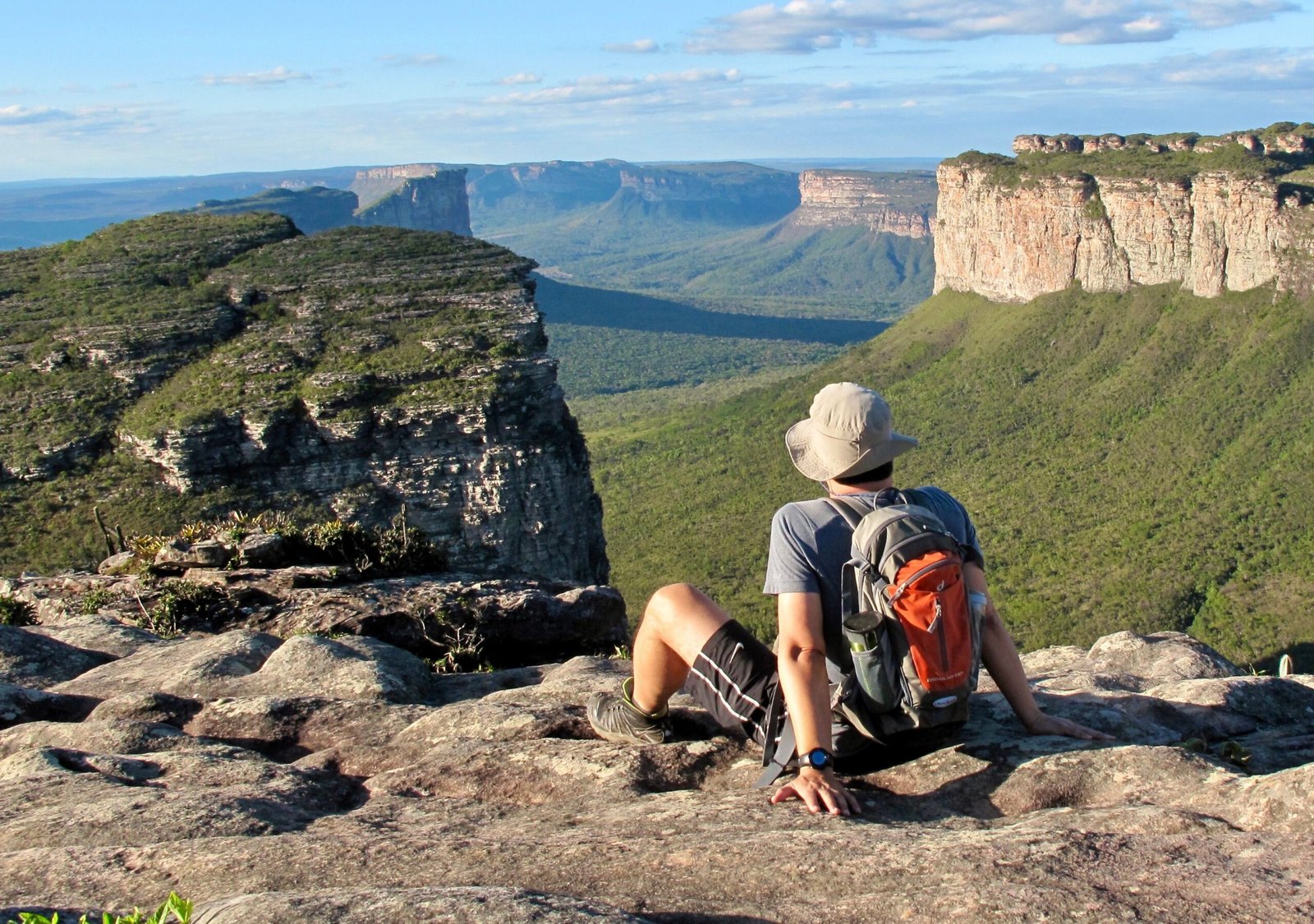
Brazil is world-famous for its golden tropical coastlines and energetic coastal cities, but its inland mountains, ancient plateaus, dense rainforests, and dramatic rock formations hide some of the most extraordinary trekking routes on Earth. Before heading out into the wilderness, exploring our comprehensive guides on the best time to visit Brazil and general travel safety in Brazil will help you plan a smooth and secure South American itinerary. From multi-day backcountry journeys through flooded canyons to scenic urban hikes in Rio de Janeiro, exploring the best hiking in Brazil offers foreign travelers an intimate look at the country’s staggering natural diversity.
Whether you want to climb above the clouds in Rio, trek between remote off-grid homesteads in Bahia, or hike through prehistoric rock art reserves in the Northeast, Brazil caters to every level of outdoor enthusiast. International travel resources lconfirm that Brazil’s national park infrastructure has expanded significantly for international adventurers. To ensure complete peace of mind while trekking abroad, securing international travel coverage through SafetyWing travel insurance protects foreign tourists against unexpected medical issues, trip delays, and backcountry emergencies.
🧳 Plan your trip to Brazil
🏨 Hotels: Browse the best hotels on Booking.com
🎟️ Tours & activities: Find tours on Civitatis ·
🚗 Car rental: Compare prices on Rentcars
🛡️ Travel insurance: Get a quote here
Why Brazil is a world-class hiking destination
Spanning nearly half of the South American continent, Brazil houses six distinct biomes, including the Amazon rainforest, Atlantic Forest (Mata Atlântica), Cerrado savanna, Pantanal wetlands, Caatinga drylands, and Southern Pampas. This incredible ecological variety creates wildly diverse hiking terrain within a single country. According to conservation guidelines from UNESCO World Heritage Centre, Brazil protects some of the most biologically valuable natural reserves on Earth.
Unlike heavily commercialized mountain trails in North America or Western Europe, many of Brazil’s finest hiking routes pass through preserved national parks, conservation units, and traditional rural communities where local culture remains deeply rooted. On a single trip, you can traverse table-topped mountains (chapadas), swim under roaring waterfalls, navigate coastal rainforests, and stand atop granite peaks overlooking urban coastal bays.
Furthermore, Brazil’s extensive network of national parks (parques nacionais) has expanded infrastructure significantly in recent years. Well-marked trailheads listed on global trekking platforms like AllTrails Brazil and registered local guide associations make outdoor exploration increasingly accessible to international travelers seeking genuine adventure.
Best multi-day hikes in Brazil for backcountry trekkers
If you crave immersive multi-day trekking, remote wilderness campsites, and off-grid community hospitality, Brazil delivers world-class long-distance trails.
1. Vale do Pati Trek (Chapada Diamantina National Park, Bahia)
Often rated by international outdoor magazines like Lonely Planet as the single best multi-day hike in South America, the Vale do Pati trek cuts through the heart of Chapada Diamantina National Park. Located in the interior of Bahia state, this ancient plateau features flat-topped quartz mountains, deep green valleys, towering sheer cliffs, and cascading waterfalls.
- Duration: 3 to 5 days (40 to 70 kilometers, depending on the route)
- Difficulty Level: Moderate to strenuous
- Key Highlights: Cachoeirão waterfall (viewed from a 280-meter cliff overhang), Morro do Castelo peak, and sunrise views across the valley floor.
- Local Experience: What makes Vale do Pati truly unique is the lodging. Trekkers sleep in the homes of native valley residents (nativos), enjoying home-cooked regional dinners made with locally grown vegetables, fresh coffee, and wood-fired breads.
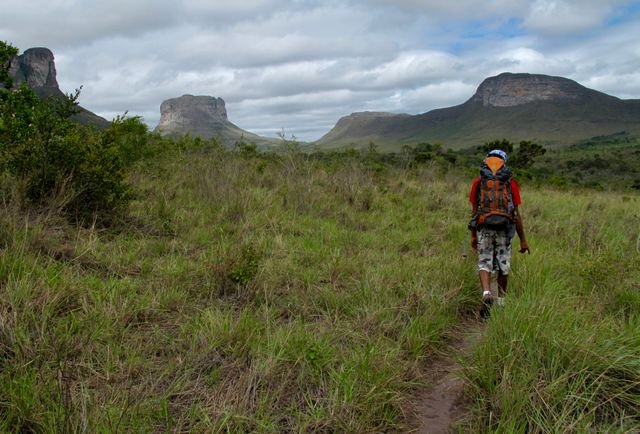
2. Petrópolis to Teresópolis Traverse (Serra dos Órgãos National Park, Rio de Janeiro)
Known locally as the Travessia Petrópolis-Teresópolis, this classic 32-kilometer mountain ridge trek crosses the dramatic jagged peaks of the Serra dos Órgãos mountain range, located just two hours inland from Rio de Janeiro.
- Duration: 3 days (32 kilometers)
- Difficulty Level: Strenuous (steep rock scrambles and high elevation gain)
- Key Highlights: Pedra do Açu plateau, Castelos do Açu rock formations, and views of the famous Dedo de Deus (God’s Finger) granite spire.
- Overnight Logistics: Trekkers stay at mountain huts (abrigos) or designated park campsites managed by ICMBio. Reservations must be booked well in advance.
3. Monte Roraima Trek (Roraima State)
Located on the remote northern border between Brazil, Venezuela, and Guyana, Monte Roraima is a massive, flat-topped tabletop mountain (tepui) rising nearly 2,800 meters above sea level. This ancient geological formation inspired Sir Arthur Conan Doyle’s famous novel The Lost World.
- Duration: 6 to 8 days round-trip
- Difficulty Level: Very challenging
- Key Highlights: Eerie black rock labyrinths, endemic quartz crystal valleys, natural stone jacuzzis, and dramatic cloud-filled cliff edges.
- Logistics: A certified Indigenous guide and expedition logistics company are mandatory for safety and environmental protection.
4. Serra Fina Traverse (Minas Gerais / São Paulo Border)
For experienced mountain endurance hikers, the Serra Fina traverse across the Mantiqueira mountain range is widely considered the most physically demanding mountain trek in Brazil.
- Duration: 4 days (30 kilometers across high ridges)
- Difficulty Level: Extreme (steep vertical ascents, freezing night temperatures, and limited water sources along the ridge)
- Key Highlights: Reaching the summit of Pico da Pedra Mina (2,798 meters), the fourth highest peak in Brazil, with sweeping 360-degree views across southeastern highlands.
Best day hikes in Rio de Janeiro: urban rainforest adventures
Rio de Janeiro is one of the few global metropolises where lush tropical rainforest meets high granite peaks directly within city limits. You can hike through dense jungle in the morning and relax on Ipanema Beach by early afternoon. For a detailed breakdown of local city trails, check out our comprehensive guide to hiking in Rio de Janeiro.
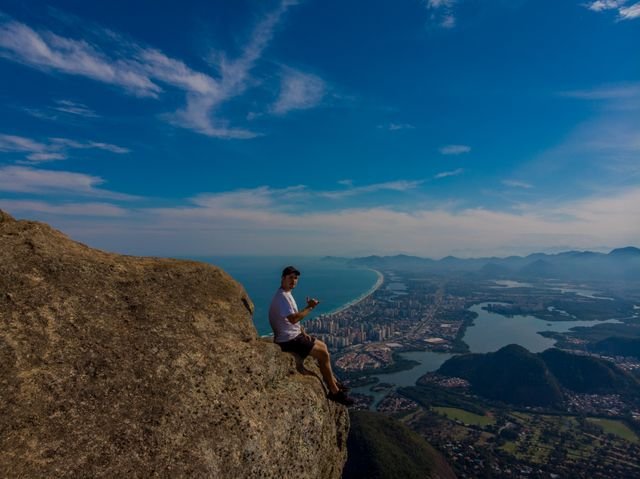
1. Pedra da Gávea
Pedra da Gávea is Rio’s ultimate challenge for adventurous day hikers. Rising 844 meters directly above the Atlantic Ocean, this massive monolith delivers unmatched panoramic views of Barra da Tijuca, São Conrado, and the South Zone.
- Distance: 6 kilometers round-trip
- Duration: 5 to 7 hours
- Difficulty: Strenuous (includes an exposed rock climbing section known as Carrasqueira)
- Safety Tip: Less experienced hikers or those with a fear of heights should hire an accredited mountain guide equipped with safety ropes and harnesses for the rock scramble section.
2. Tijuca National Park Trails (Pico da Tijuca and Bico do Papagaio)
Tijuca National Park is recognized as the world’s largest urban tropical rainforest. The trail network is shaded, well-maintained, and filled with native wildlife like toucans, capuchin monkeys, and colorful butterflies.
- Pico da Tijuca: The highest peak in the city (1,021 meters). The summit ascent concludes with a historic staircase carved directly into granite rock in 1920.
- Bico do Papagaio: A slightly shorter peak offering spectacular views of Guanabara Bay and Corcovado Mountain.
3. Morro Dois Irmãos (Two Brothers Hill)
Starting at the top of the Vidigal neighborhood, this short but steep coastal hike delivers one of the most iconic postcard views in South America.
- Distance: 3 kilometers round-trip
- Duration: 2 hours
- Difficulty: Moderate
- Trail Experience: Reaching the trailhead involves taking a local motorcycle-taxi or van up through Vidigal, offering an authentic look at local neighborhood life before entering the quiet forest trail.
Iconic mountain, waterfall, and plateau trails across Brazil
Beyond Rio and Bahia, Brazil’s interior state parks and plateau regions house breathtaking day hikes and multi-day trail systems that showcase waterfalls, savanna landscapes, and deep river canyons.
1. Chapada dos Veadeiros National Park (Goiás State)
Situated in the high-altitude Central Brazilian Savanna (Cerrado), Chapada dos Veadeiros is famous for crystal-clear quartz riverbeds, massive waterfalls, and dramatic canyon walls.
- Trilha dos Saltos: A 10-kilometer circuit leading to two massive waterfalls, including a roaring 120-meter drop and a deep natural swimming pool beneath an 80-meter cascade.
- Mirante da Janela: A challenging day hike leading to a natural stone “window” frame looking directly across a deep gorge toward the park’s twin waterfalls.
2. Aparados da Serra and Serra Geral National Parks (Rio Grande do Sul / Santa Catarina)
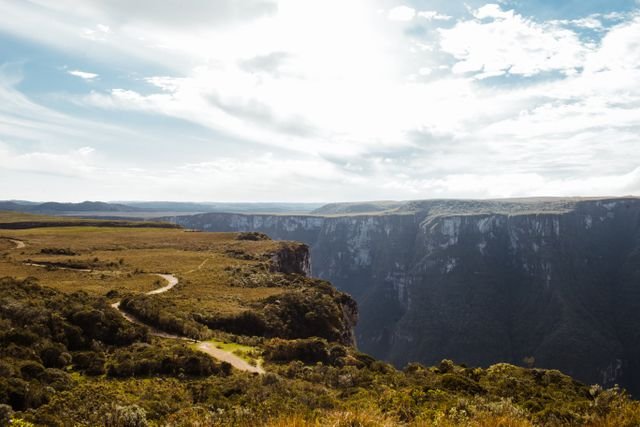
Located in Southern Brazil along the border of Rio Grande do Sul and Santa Catarina states, these neighboring parks showcase Brazil’s most impressive canyon topography.
- Cânion Itaimbezinho: Walk along the rim of a 720-meter deep gorge flanked by vertical red rock walls overgrown with green subtropical forest.
- Trilha do Rio do Boi: A challenging day hike along the riverbed inside the floor of Itaimbezinho canyon, requiring wading through mountain streams surrounded by vertical cliff faces.
3. Serra da Canastra National Park (Minas Gerais)
Known as the birthplace of the São Francisco River and home to traditional Canastra artisanal cheese producers, this high plateau reserve is ideal for wildlife watching and waterfall hikes.
- Casca d’Anta Waterfall: A trail leading to the base of a massive 186-meter waterfall, where you can spot giant anteaters, maned wolves, and pampas deer in the surrounding savanna grasslands.
Off-the-beaten-path treks: dunes, jungles, and ancient history
Travelers seeking unique trekking landscapes outside traditional mountain ranges can explore Brazil’s extraordinary desert coastal dunes, Amazonian rainforest trails, and prehistoric archaeological sites.
1. Lençóis Maranhenses Dune Trek (Maranhão State)
Located along the northern Atlantic coast, Lençóis Maranhenses National Park features thousands of white sand dunes interspersed with freshwater, rain-filled turquoise lagoons between June and September.
- The Traverse: A 3 to 4-day desert trek crossing the entire dune field on foot from Atins to Santo Amaro, staying overnight in remote oasis hamlets (Queimada dos Britos and Baixa Grande).
- Trekking Logistics: Hikers wake up at 4:00 AM to walk across cool morning sands before midday sun, spending afternoons swimming in freshwater dunes.
2. Serra da Capivara Archaeological Trails (Piauí State)
Recognized as a world heritage site by UNESCO, Serra da Capivara National Park holds the highest concentration of prehistoric rock art in the Americas, with thousands of cave paintings dating back over 25,000 years set within dramatic sandstone canyons.
- Trail Experience: Well-paved stone paths, metal stairways, and rustic trail systems connect prehistoric rock shelters, deep gorges, and panoramic canyon overlooks.
- Guided Tours: Park regulations require a certified local guide for all trail access. You can easily arrange multi-day excursions such as a Civitatis Serra da Capivara 3-day tour departing from regional hubs.
3. Amazon Rainforest Jungle Hiking (Amazonas State)
Trekking through the Amazon rainforest provides an unparalleled immersion into pristine primary forest. Guided day hikes and survival treks depart from jungle lodges near Manaus.
- Trail Highlights: Learn forest navigation, identify medicinal plants, spot native wildlife like sloths and poison dart frogs, and learn traditional jungle survival techniques from local guides.
- Guided Logistics: Multi-day guided expeditions, such as a Civitatis Manaus 3-day jungle tour, provide private river transport, expert indigenous naturalist guides, hammock camping, and jungle trail hiking.
4. Chapada das Mesas National Park (Maranhão / Tocantins)
Famous for table-topped red rock monoliths, crystal-clear blue spring pools, and canyon trail circuits, Chapada das Mesas is one of Northeast Brazil’s ultimate hidden gems.
- Trail Highlights: Hike through the Portal da Chapada rock arch and swim in the turquoise pools of Encanto Azul and Poço Azul.
- Guided Excursions: Booking an organized itinerary like a Civitatis Chapada das Mesas trip ensures smooth private transportation across remote desert roads and park trailheads.
Best time of year for hiking in Brazil
Because Brazil is a continental country spanning tropical, equatorial, and subtropical climate zones, seasonal weather patterns vary significantly by region. Comparing monthly weather breakdowns in our articles on Brazil in May, Brazil in June, Brazil in July, and Brazil in August will help align your trekking plans with regional dry climate cycles.
1. Southeast and south (Rio de Janeiro, Minas Gerais, São Paulo, Santa Catarina)
- Best Season: May to September (Autumn and Winter)
- Weather Conditions: Dry, clear sunny days, comfortable humidity, and cool evenings. This is the official mountain hiking season (temporada de montanha), minimizing flash flood risks and summer rain storms.
2. Central-west and Bahia (Chapada Diamantina, Chapada dos Veadeiros)
- Best Season: May to October (Dry Season)
- Weather Conditions: Sunny weather, clear skies, and stable river levels ideal for canyon trekking, waterfall swimming, and multi-day valley crossings.
3. Northeast dunes and arid parks (Lençóis Maranhenses, Serra da Capivara)
- Best Season: June to September
- Weather Conditions: Rainwater lagoons in Lençóis Maranhenses are completely full following autumn rains, while temperatures in inland Piauí remain manageable.
Safety, guided tours, and trail etiquette in Brazil
Hiking in Brazil is safe, rewarding, and accessible when you follow sensible travel practices and respect local environmental guidelines. For comprehensive safety protocols across major destinations, consult our dedicated Brazil travel safety guide.
1. Hiring local guides vs. self-guided hiking
While shorter urban trails in Rio de Janeiro (like Morro da Urca or Tijuca Peak) are straightforward and well-marked for independent hikers, multi-day backcountry treks (like Vale do Pati, Monte Roraima, or Lençóis Maranhenses) require accredited local guides (guias credenciados). Local guides manage route navigation, arrange native family lodgings, handle park permits, and provide vital support in emergency situations.
2. Park entrance regulations and fees
Many Brazilian national parks managed by ICMBio are free to enter or charge modest conservation entry fees. Certain popular reserves require advance online permit registrations or mandatory guide check-ins at visitor centers before trail access is granted.
3. Hydration and sun protection
Tropical humidity, high sun exposure, and steep elevation gains require adequate preparation:
- Carry at least 2 to 3 liters of water per person on day hikes.
- On backcountry multi-day treks, bring water purification tablets or a portable filtration straw to safely drink from freshwater mountain streams.
- Apply high-SPF broad-spectrum sunscreen and insect repellent containing DEET or Icaridin.
4. Travel insurance coverage
Comprehensive medical and adventure travel insurance is essential when undertaking outdoor sports or mountain trekking abroad. Policies like SafetyWing travel insurance provide reliable coverage for medical emergencies, sudden trip interruptions, and travel logistics across Brazil.
5. Transport between trailheads
Many national park gateways (such as Lençóis in Chapada Diamantina, Alto Paraíso in Chapada dos Veadeiros, or Itamonte in Serra Fina) are located several hours from regional airport hubs. Reserving a vehicle via Rentcars online platform gives independent travelers total flexibility to transport heavy backpacks, navigate mountain access roads, and visit remote trailheads at their own pace.
Essential packing list for trekking in Brazil
Packing for a trekking trip in Brazil requires lightweight, quick-drying gear suitable for tropical temperatures during the day and cooler mountain air at night. For a complete regional checklist, consult our full guide on what to pack for a trip to Brazil.
- Footwear: Sturdy, broken-in trail running shoes or waterproof hiking boots with grippy rubber soles for wet granite and mud.
- Clothing: Moisture-wicking synthetic t-shirts, lightweight long-sleeve sun shirts (UPF 50+), quick-dry trekking pants, and extra trail socks.
- Warm Layers: A lightweight fleece sweater or packable down jacket for cold high-altitude mountain nights in Minas Gerais, Rio, or Southern national parks.
- Rain Gear: Compact, breathable waterproof jacket or lightweight rain poncho for sudden tropical showers.
- Daypack: A 20 to 30-liter backpack with a waterproof rain cover for day trips; a 50 to 65-liter backpack for multi-day backcountry treks.
- Navigation and Power: Fully charged smartphone with offline GPS trail maps (e.g., Wikiloc or AllTrails), headlamp with extra batteries, and a 10,000+ mAh portable power bank.
- First Aid and Sun Gear: Polarized sunglasses, wide-brimmed sun hat, blister band-aids, personal medications, high-SPF sunscreen, and insect repellent.
Practical hiking summary and trail overview table
To help you compare top trail options across Brazil, this reference table outlines region, difficulty level, best season, distance, and guided requirements:
| Trail / Park Name | Region / State | Difficulty Level | Best Season | Total Distance | Guide Recommended? |
| Vale do Pati | Chapada Diamantina, Bahia | Moderate / Strenuous | May to October | 40 – 70 km (3-5 Days) | Highly Recommended |
| Petrópolis-Teresópolis | Serra dos Órgãos, Rio | Strenuous | May to September | 32 km (3 Days) | Recommended |
| Pedra da Gávea | Rio de Janeiro City | Strenuous | Year-round (Dry days) | 6 km (Day Hike) | Recommended for climbs |
| Pico da Tijuca | Tijuca National Park, Rio | Moderate | Year-round | 6 km (Day Hike) | Self-Guided optional |
| Trilha dos Saltos | Chapada Veadeiros, Goiás | Moderate | May to October | 10 km (Day Hike) | Self-Guided allowed |
| Lençóis Maranhenses | Maranhão | Strenuous (Soft sand) | June to September | 45 km (3-4 Days) | Mandatory |
| Serra da Capivara | Piauí | Easy / Moderate | May to October | Various (Day Hikes) | Mandatory |
| Cânion Itaimbezinho | Rio Grande do Sul | Easy / Moderate | April to October | 6 km (Day Hikes) | Self-Guided allowed |
| Monte Roraima | Roraima Border | Very Challenging | October to March | 90 km (6-8 Days) | Mandatory |
Frequently Asked Questions about hiking in Brazil
To help you plan a safe and memorable outdoor adventure across Brazil’s national parks, mountains, and backcountry reserves, we have answered the most common travel questions international trekkers ask. From identifying top scenic destinations and assessing trail safety to understanding guide requirements and packing essentials, here is everything you need to know before hitting the trails in South America.


