
When most people think of Rio de Janeiro, they picture Christ the Redeemer standing atop Corcovado mountain, Copacabana’s iconic beach, or Sugarloaf Mountain rising from Guanabara Bay. But the state of Rio de Janeiro encompasses so much more than its famous capital city. This relatively small but incredibly diverse Southeast Brazilian state packs an extraordinary variety of experiences into its borders—from the urban energy of Rio city to pristine beaches, colonial towns, mountain escapes, and tropical islands.
The state of Rio de Janeiro Brazil offers travelers everything from world-famous tourist attractions and vibrant cultural events to hidden natural paradises and charming historical towns. Whether you’re seeking the excitement of Carnival, the celebration of New Year’s Eve on Copacabana Beach, adventure in stunning natural parks, relaxation on Caribbean-like beaches, or immersion in Brazilian culture and history, this comprehensive guide to the State of Rio de Janeiro will help you plan an unforgettable journey.
🧳 Plan your trip to Brazil
🏨 Hotels: Browse the best hotels on Booking.com
🎟️ Tours & activities: Find tours on Civitatis ·
🚗 Car rental: Compare prices on Rentcars
🛡️ Travel insurance: Get a quote here
Where is the state of Rio de Janeiro?
Understanding the state of Rio de Janeiro’s location helps you appreciate its strategic importance and accessibility as a travel destination.
Location in Brazil and South America
The state of Rio de Janeiro is located in the Southeast region of Brazil, positioned along the Atlantic Ocean coast. In terms of South American geography, it sits on Brazil’s southeastern coastline, approximately 22-23 degrees south of the equator, placing it firmly in the tropical and subtropical climate zones.
Geographical coordinates: The state spans roughly from 20°45’S to 23°22’S latitude and 40°57’W to 44°53’W longitude.
Size and area: Despite being one of Brazil’s smaller states (16th largest), Rio de Janeiro covers approximately 43,696 square kilometers (16,871 square miles)—about the size of Denmark or slightly larger than Maryland and Delaware combined.
Coastline: The state boasts over 600 kilometers (373 miles) of Atlantic coastline, creating the foundation for its incredible beach diversity and maritime culture.
Neighboring states
The state of Rio de Janeiro shares borders with three other Brazilian states, each contributing to the region’s cultural and economic dynamics:
São Paulo (to the southwest): Brazil’s largest and most populous state, sharing a significant border with Rio de Janeiro. The proximity of these two economic powerhouses creates a massive economic corridor.
Minas Gerais (to the north and northwest): Brazil’s second-most populous state, known for colonial cities, coffee production, and mining heritage. The mountainous border region between Rio and Minas Gerais features stunning scenery and charming towns.
Espírito Santo (to the northeast): A smaller coastal state with beautiful beaches and a relaxed atmosphere.
The state’s strategic location between Brazil’s economic center (São Paulo) and the historically rich state of Minas Gerais, combined with its extensive Atlantic coastline, has made it a crucial hub for Brazilian trade, culture, and tourism throughout history.
Why Rio de Janeiro is one of Brazil’s most visited states
The state of Rio de Janeiro consistently ranks among Brazil’s top tourism destinations for several compelling reasons:
Iconic landmarks: The state contains some of the world’s most recognizable tourist attractions, including Christ the Redeemer (one of the New Seven Wonders of the World), Sugarloaf Mountain, and Copacabana Beach.
Major events: Rio hosts globally famous events like Carnival (the world’s largest celebration) and New Year’s Eve celebrations that attract millions of visitors annually.
Accessibility: Two major international airports (Galeão and Santos Dumont) provide excellent connectivity to international and domestic destinations.
Beach diversity: From world-famous urban beaches to pristine, undeveloped paradises, the state offers coastal experiences for every preference.
Cultural significance: As Brazil’s former capital (until 1960), Rio de Janeiro state holds immense historical and cultural importance, reflected in its architecture, museums, and traditions.
Varied landscapes: The state compresses incredible geographical diversity into a relatively small area—beaches, islands, mountains, rainforests, and colonial towns all within a few hours of each other.
Tourism infrastructure: Decades of international tourism have created excellent infrastructure, making travel relatively easy and comfortable for international visitors.

Overview of the state of Rio de Janeiro
Understanding the state’s basic characteristics helps contextualize your travel planning.
Capital and major cities
Rio de Janeiro (often called “Rio city” or just “Rio”): The state capital and by far the largest city, with approximately 6.7 million residents in the city proper and over 13 million in the metropolitan area. Rio de Janeiro serves as the economic, cultural, and tourism heart of the state.
Niterói: Located across Guanabara Bay from Rio city, Niterói is the state’s second-largest city with approximately 500,000 residents. Known for its stunning Oscar Niemeyer-designed Contemporary Art Museum and beautiful beaches, Niterói offers excellent views of Rio city and experiences like paragliding flights over coastal mountains.
Duque de Caxias: Part of Rio’s metropolitan area, this industrial city has approximately 900,000 residents.
Nova Iguaçu: Another metropolitan area city with roughly 800,000 residents.
Beyond the metropolitan area, the state includes charming smaller cities and towns that offer different travel experiences:
- Paraty: Colonial gem with preserved 17th-century architecture
- Petrópolis: Imperial mountain city that served as Brazil’s summer capital
- Cabo Frio: Beach resort town in the Lakes Region
- Búzios: Sophisticated beach resort peninsula
- Arraial do Cabo: Pristine beach destination with Caribbean-like waters
- Angra dos Reis: Gateway to hundreds of tropical islands
Population, language, and currency
Population: The state of Rio de Janeiro has approximately 17 million residents (2023 estimates), making it Brazil’s third most populous state after São Paulo and Minas Gerais. Despite being one of the smaller states geographically, its population density is among Brazil’s highest.
Language: Portuguese is the official and predominant language. In tourist areas like Ipanema, Copacabana, Búzios, and Paraty, you’ll find English speakers in hotels, restaurants, and tour operations. However, learning basic Portuguese phrases significantly enhances your experience, especially outside major tourist zones.
Currency: Brazilian Real (R$ or BRL). Credit cards are widely accepted in tourist areas, but cash remains important for small purchases, tips, markets, and less touristy locations.
Timezone: Brasília Time (BRT), which is UTC-3. The state does not observe daylight saving time (Brazil eliminated DST in 2019).
Interesting facts about the state of Rio de Janeiro
Former capital: Rio de Janeiro city served as Brazil’s capital from 1763 to 1960, when the capital moved to the newly built Brasília. This capital status profoundly influenced the state’s architecture, culture, and infrastructure.
UNESCO World Heritage Sites: The state contains multiple UNESCO-recognized sites:
- Rio de Janeiro: Carioca Landscapes between the Mountain and the Sea
- Paraty and Ilha Grande cultural and biodiversity complex
Birthplace of bossa nova: The sophisticated musical genre bossa nova originated in Rio de Janeiro in the late 1950s, with Ipanema’s Tom Jobim and Vinicius de Moraes creating iconic songs like “The Girl from Ipanema.”
Largest urban forest: Tijuca Forest in Rio city is one of the world’s largest urban forests, covering approximately 3,200 hectares and including Christ the Redeemer and various hiking trails.
Christ the Redeemer: The 30-meter (98-foot) Art Deco statue completed in 1931 is Brazil’s most iconic symbol and one of the New Seven Wonders of the World.
Coffee heritage: The Paraíba Valley in Rio de Janeiro state was once one of the world’s most important coffee-producing regions in the 19th century, creating immense wealth that funded many historical buildings.
Island paradise: The state contains over 2,000 islands, including the famous Ilha Grande, creating endless opportunities for island exploration.
Nickname origin: Rio de Janeiro means “January River” in Portuguese, named by Portuguese explorers who mistakenly thought Guanabara Bay was a river when they arrived in January 1502.
Climate and best time to visit
Understanding the state of Rio de Janeiro’s weather patterns helps you choose the ideal time for your visit based on your priorities.
Climate in the state of Rio de Janeiro
The state of Rio de Janeiro has a tropical climate along the coast and subtropical climate in mountainous interior regions. This creates pleasant year-round conditions with some seasonal variation.
Coastal areas (Rio city, Búzios, Arraial do Cabo, Paraty):
- Temperature: Average highs of 25-30°C (77-86°F) throughout the year
- Summer (December-March): Hot and humid, 30-35°C (86-95°F), with frequent rain showers
- Winter (June-September): Mild and pleasant, 20-25°C (68-77°F), less humidity, minimal rain
- Rainfall: Most rain falls December-March; June-August are driest months
- Humidity: High year-round, especially in summer
Mountain regions (Petrópolis, Teresópolis, Nova Friburgo):
- Temperature: Cooler than coast, 15-25°C (59-77°F) typical
- Summer: Pleasant warmth with afternoon rains
- Winter: Cool to cold, 8-18°C (46-64°F), occasionally near freezing in higher elevations
- Character: European-like climate, popular escape from coastal heat
Summer, winter, and shoulder seasons
Summer (December-March):
- Pros: Beach season, warm ocean, vibrant atmosphere, major events (New Year’s, Carnival)
- Cons: Hot and humid, crowded, expensive, frequent rain showers, high season prices
- Best for: Beach lovers, event attendees, nightlife seekers
Autumn (April-May):
- Pros: Pleasant temperatures, less rain, fewer crowds, better prices, comfortable hiking weather
- Cons: Ocean begins cooling, fewer events
- Best for: Balanced weather and crowds, budget travelers, outdoor activities
Winter (June-September):
- Pros: Mild weather, minimal rain, clearest skies, lowest prices, excellent hiking conditions
- Cons: Cooler ocean (still swimmable for many, 20-22°C), fewer beach crowds
- Best for: Sightseeing, hiking, cultural experiences, budget travel, mountain escapes
Spring (October-November):
- Pros: Warming weather, ocean temperature rising, fewer crowds than summer, spring flowers
- Cons: Rain increasing toward November
- Best for: Balanced conditions before high season crowds
Best Time for beaches, hiking, and events
Beach activities:
- Best: December-March (warmest water, beach culture at peak)
- Good: October-November, April (pleasant weather, fewer crowds)
- Acceptable: May-September (cooler but still enjoyable for many visitors)
Hiking and outdoor activities:
- Best: April-September (comfortable temperatures, minimal rain, clear skies)
- Good: October-November, March (transitional weather)
- Challenging: December-February (hot, humid, frequent afternoon storms)
Major events:
- Carnival: February/March (dates vary annually)
- New Year’s Eve: December 31 (massive Copacabana celebration)
- Rock in Rio: Usually September/October (when held, biennial event)
- Rio International Film Festival: September/October
Overall best time for most travelers: April-May and August-September offer the ideal balance of good weather, manageable crowds, reasonable prices, and comfortable conditions for both beach and sightseeing activities.
Main tourist destinations in the state of Rio de Janeiro
The state offers diverse destinations beyond its famous capital, each with distinct character and attractions.
Rio de Janeiro (Capital)
Rio de Janeiro city is undoubtedly the state’s main attraction and one of the world’s most iconic cities.
Must-see attractions:
- Christ the Redeemer and Sugarloaf Mountain: You can visit both iconic landmarks in one day with a combined tour that handles all transportation and provides historical context.
- Famous beaches: Copacabana, Ipanema, and Leblon offer the classic Rio beach experience
- Lapa arches and nightlife: Historic aqueduct and vibrant nightlife district
- Santa Teresa: Charming bohemian neighborhood with colonial architecture
- Tijuca National Park: Urban rainforest with hiking trails
- Museums: Museum of Tomorrow, Museum of Art of Rio, National Museum (rebuilding after 2018 fire)
Events: Carnival in Rio is the world’s most famous celebration, featuring sambadrome parades and hundreds of street parties. New Year’s Eve in Rio attracts millions to Copacabana Beach for spectacular fireworks.
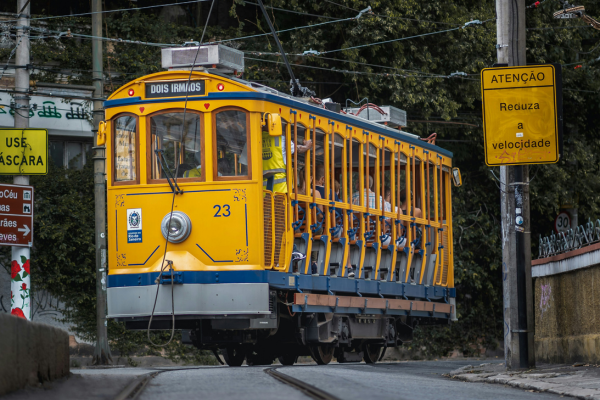
Outdoor activities: Rio offers exceptional hiking opportunities including Pedra da Gávea, Dois Irmãos, Pedra Bonita, and various Tijuca Forest trails.
Reliable airport transfers ensure smooth arrival and comfortable transportation to your Rio accommodation.
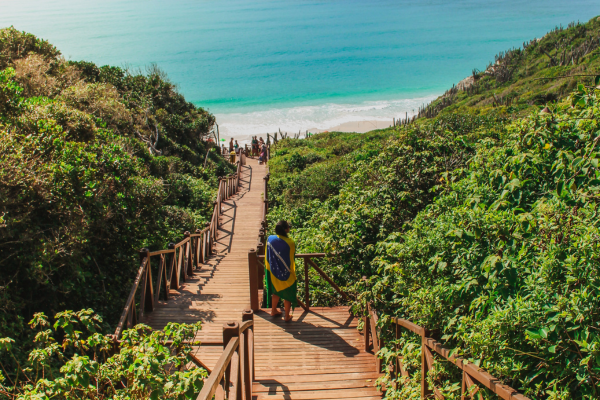
Arraial do Cabo
Often called the “Brazilian Caribbean”, Arraial do Cabo features some of Brazil’s most stunning beaches with crystal-clear turquoise waters and white sand.
Why visit:
- Praia do Farol: Frequently ranked among Brazil’s most beautiful beaches
- Praia do Forno: Pristine beach accessible by trail or boat
- Praia Grande: Long beach with strong waves, popular with surfers
- Pontal do Atalaia: Stunning viewpoint overlooking the coast
- Boat tours: Daily boat excursions visit multiple beaches and snorkeling spots
- Diving: Excellent diving with good visibility and marine life
Getting there: Located about 160 km (100 miles) east of Rio city, approximately 2.5-3 hours by car or bus. Book an Arraial do Cabo tour from Rio for a convenient day trip that includes transportation and boat tour.
Best for: Beach lovers, snorkeling/diving enthusiasts, photographers, day-trippers from Rio.
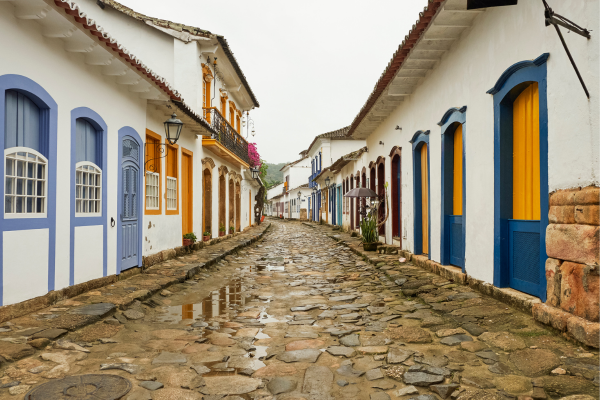
Paraty
This perfectly preserved colonial town is one of Brazil’s most charming destinations, offering history, culture, beaches, and nature.
Why visit Paraty:
- Colonial architecture: Car-free historic center with cobblestone streets and 17th-18th century buildings
- Cultural richness: Art galleries, cachaça distilleries, cultural festivals
- Beaches and islands: Over 65 beaches and 100 islands accessible by boat
- Waterfalls: Numerous waterfalls in surrounding Atlantic rainforest
- Gastronomy: Excellent seafood restaurants and culinary scene
- FLIP: International literary festival (usually July)
Activities:
- Walking tour of colonial Paraty to understand the town’s fascinating history
- Serra da Bocaina jeep tour exploring waterfalls and Atlantic rainforest
- Pico do Pão de Açúcar hiking for spectacular coastal views
- Boat trips to islands and beaches
- Cachaça distillery visits
Getting there: Located 240 km (150 miles) southwest of Rio, about 4 hours by car. Comfortable transfers to Paraty from Rio eliminate driving stress on the scenic coastal road.
Best for: History enthusiasts, culture lovers, romantic getaways, photographers, foodies.
Lakes Region (Região dos Lagos)
This coastal region northeast of Rio includes several beach towns, each with distinct character:
Búzios: Sophisticated beach resort on a scenic peninsula with 20+ beaches, excellent restaurants, boutique shopping, and vibrant nightlife. Popular with international tourists and wealthy Brazilians. You can discover Búzios from Cabo Frio on organized tours.
Cabo Frio: Larger beach town with beautiful white sand beaches (Praia do Forte, Praia das Conchas), historical fort, shopping districts, and local atmosphere. Less international than Búzios but authentic and enjoyable.
Saquarema: Surf capital with excellent waves, relaxed vibe, and local culture. Less developed and touristy than neighbors.
Arraial do Cabo: Already discussed above—the region’s natural highlight.
Best for: Beach vacations, water sports, nightlife (Búzios), surfing (Saquarema), relaxation.

Mountain region (Região Serrana)
Escape coastal heat in these charming mountain towns:
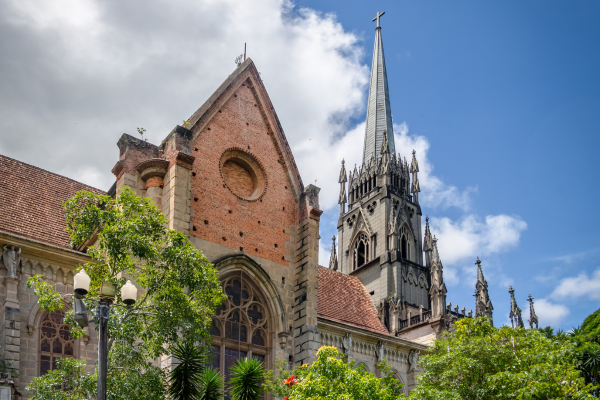
Petrópolis: Imperial city that served as Brazil’s summer capital in the 19th century. Features the Imperial Museum (Dom Pedro II’s summer palace), Crystal Palace, beautiful European-influenced architecture, and cool mountain climate. Accessible on a Petrópolis day trip from Rio.
Teresópolis: Mountain town known for Serra dos Órgãos National Park, hiking trails including Pedra do Sino (Rio state’s highest peak), European atmosphere, and outdoor activities.
Nova Friburgo: Swiss-influenced mountain town with European architecture, chocolate factories, craft beer breweries, and surrounding nature.
Penedo: Finnish-influenced district near Itatiaia with Nordic architecture, chocolates, and mountain scenery.
Best for: Cool weather escapes, hiking, European-influenced culture, outdoor activities, mountain scenery.
Angra dos Reis and Ilha Grande
Angra dos Reis: Gateway town to 365 islands in the bay, offering stunning coastal scenery and island-hopping opportunities. Experience the beautiful islands with boat trips around Angra or explore the unique Botinas Islands.
Ilha Grande: Car-free tropical island paradise with pristine beaches, Atlantic rainforest, hiking trails, and laid-back atmosphere. No cars or ATMs on the island—cash only, arrive prepared. Book transfers to Ilha Grande from Rio that handle all transportation logistics including ferry connections.
Best for: Island paradise seekers, snorkeling/diving, hiking, digital detox, romantic escapes
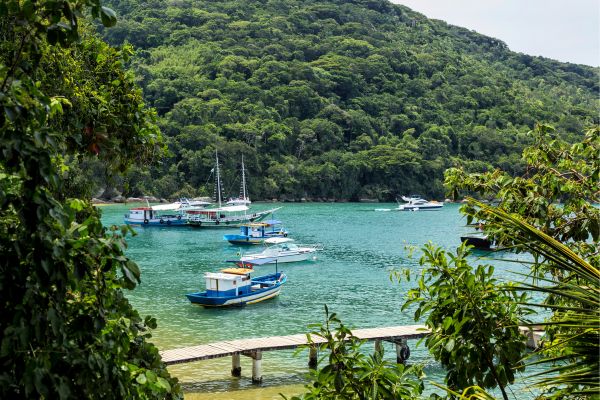
Beaches in the State of Rio de Janeiro
The state’s 600+ km coastline offers incredible beach diversity, from world-famous urban beaches to hidden tropical paradises.
Famous urban beaches
Copacabana (Rio city): The world’s most famous beach, featuring a 4-km crescent of sand, the iconic black and white wave-pattern boardwalk, beach volleyball, and vibrant atmosphere. While the water quality isn’t pristine, the cultural experience is unmatched.
Ipanema (Rio city): Sophisticated beach divided into “postos” (stations) that attract different crowds—posto 9 is the most famous. Known for beautiful sunsets behind Dois Irmãos mountains, trendy beach culture, and fit, fashionable beachgoers.
Leblon (Rio city): Upscale continuation of Ipanema, slightly calmer and more family-friendly, with excellent restaurants nearby.
Barra da Tijuca (Rio city): 18-km stretch of beach popular with surfers, less crowded than Ipanema/Copacabana, newer neighborhood with shopping malls and residential towers.
Itacoatiara (Niterói): Beautiful beach backed by mountains, popular with surfers, good waves, stunning scenery.

Pristine and wild beaches
Praia do Farol (Arraial do Cabo): Accessible only by boat, crystal-clear turquoise water, white sand, limited daily visitors to protect ecosystem—often cited as Brazil’s most beautiful beach.
Praia do Forno (Arraial do Cabo): Stunning beach with turquoise water, accessible by scenic trail or boat, excellent snorkeling.
Lopes Mendes (Ilha Grande): 3-km stretch of fine white sand and crystal water, consistently ranked among Brazil’s best beaches, accessible by boat or trail from Vila do Abraão.
Aventureiro (Ilha Grande): Remote beach on the island’s ocean-facing side, pristine nature, camping allowed, challenging access requires boat and hiking.
Grumari (Rio city): Wild beach west of Barra da Tijuca, less developed, backed by mountains and Atlantic forest, popular with nature lovers.
Beaches for Surfing, Diving, and Relaxing
Best for surfing:
- Itacoatiara (Niterói): Consistent waves, beautiful setting
- Prainha (Rio city): Small beach between mountains, excellent surf
- Saquarema beaches: Known surf destination
- Barra da Tijuca (Rio city): Various breaks along long beach
Best for snorkeling and diving:
- Arraial do Cabo: Best visibility, abundant marine life, several dive shops
- Ilha Grande: Various sites around the island
- Angra dos Reis islands: Tropical fish, clear water
Best for relaxation:
- Paraty beaches: Calm, scenic, less crowded
- Búzios beaches: Sophisticated beach club atmosphere
- Ilha Grande beaches: Peaceful, natural settings
- Grumari (Rio city): Escape city energy while staying near Rio
Nature, hiking, and ecotourism
The state’s natural diversity extends well beyond beaches, offering exceptional opportunities for outdoor enthusiasts.
Famous hiking trails in the state
Hiking in Rio de Janeiro state offers trails for all skill levels, from easy walks to challenging climbs.
Pedra da Gávea (Rio city): Challenging 7-km round-trip hike to 842-meter summit with spectacular 360-degree views. Requires some scrambling near the top, not for those afraid of heights. Approximately 4-6 hours.
Dois Irmãos/Two Brothers (Rio city): Moderate 3-km round-trip hike offering incredible views of Ipanema, Leblon, and surrounding areas. Popular morning hike, approximately 2-3 hours.
Pedra Bonita (Rio city): Short but steep 1.5-km trail to launching point for hang gliders and paragliders. Stunning views with less physical demand than longer hikes.
Morro Dois Irmãos (Rio city): Different trail from Vidigal favela community, steep but rewarding with panoramic views of beaches and Christ the Redeemer.
Pico da Tijuca (Rio city): Highest point in Tijuca National Park (1,021 meters), moderate difficulty, approximately 3-4 hours round trip, excellent views.
Pedra do Sino (Teresópolis): Highest peak in Serra dos Órgãos National Park (2,263 meters), challenging full-day hike (approximately 8-10 hours round trip), spectacular mountain views.
Pico do Pão de Açúcar (Paraty): Moderate coastal trail offering stunning ocean and mountain views.
Trail tips: Always start early (by 7-8 AM) to avoid afternoon heat and storms. Bring plenty of water, sun protection, snacks, and appropriate footwear. Consider hiring local guides for safety and enhanced experience, especially on challenging trails.

National parks and protected areas
Tijuca National Park (Rio city): One of the world’s largest urban forests, covering 3,200 hectares. Contains Christ the Redeemer, various hiking trails, waterfalls (Cascatinha Taunay), and rich biodiversity.
Serra dos Órgãos National Park (Teresópolis/Petrópolis): Mountain park featuring dramatic rock formations, challenging hiking including Pedra do Sino, waterfalls, Atlantic rainforest, and diverse wildlife.
Ilha Grande State Park: Protects much of Ilha Grande island, preserving Atlantic rainforest, beaches, and biodiversity. Multiple hiking trails cross the island.
Serra da Bocaina National Park: Mountainous park straddling Rio and São Paulo states, featuring Atlantic rainforest, waterfalls, old gold-trail routes, and mountain scenery.
Cairuçu Environmental Protection Area: Protects coastal area around Paraty, including rainforest, beaches, islands, and traditional communities.
Waterfalls, islands, and outdoor experiences
Waterfalls: The state contains numerous waterfalls, particularly in mountain regions and around Paraty. Popular falls include Cachoeira do Horto (Paraty), Cascata das Andorinhas (Paraty), and various falls in Serra da Bocaina.
Islands: With over 2,000 islands, the state offers endless island exploration opportunities. Ilha Grande is the most famous, but Angra dos Reis Bay contains 365 islands, each with unique character.
Other outdoor activities:
- Paragliding/hang gliding: Popular in Rio city and Niterói
- Rock climbing: Various routes in state parks
- Stand-up paddleboarding: Calm bays and beaches
- Kayaking: Island exploration, particularly Paraty and Angra
- Surfing: Numerous beaches with good waves
- Diving and snorkeling: Arraial do Cabo, Ilha Grande, Angra dos Reis
You can explore all these activities and experiences across the State of Rio de Janeiro through organized tours that provide equipment, guides, and safety.
Culture, history, and carioca identity
The state’s cultural richness reflects its complex history and diverse influences.
Indigenous, African, and European Influences
The state of Rio de Janeiro’s culture emerged from the interaction of three main groups:
Indigenous peoples: The region’s original inhabitants, primarily Tupi and Guarani peoples, contributed place names (Ipanema, Copacabana, Niterói), foods (manioc, fish-based dishes), and cultural elements.
Africans: Brought as enslaved people, particularly from Angola, Congo, and West Africa, African influence profoundly shaped Rio’s music, religion (Candomblé, Umbanda), cuisine, and cultural expressions. Samba and Carnival have deep African roots.
Europeans: Portuguese colonizers established Rio in 1565, contributing language, religion (Catholicism), architecture, and administrative systems. Later European immigration (Italian, German, Swiss) added additional cultural layers, particularly in mountain regions.
This cultural mixing (mestiçagem) created the unique “Carioca” identity—warm, relaxed, beach-oriented, musical, and welcoming.
Music: samba and bossa nova
Samba: Developed in Rio’s Afro-Brazilian communities in the early 20th century, samba became Brazil’s most iconic musical genre. Rio’s samba schools create the spectacular Carnival parades, and samba clubs (gafieiras) keep the tradition alive year-round.
Bossa nova: This sophisticated musical style emerged in Rio’s Ipanema neighborhood in the late 1950s. Artists like Tom Jobim, Vinicius de Moraes, and João Gilberto created a gentle, jazz-influenced sound that became internationally famous with songs like “The Girl from Ipanema” and “Desafinado.”
Other important genres: Choro (instrumental genre predating samba), funk carioca (contemporary urban music), and MPB (Brazilian Popular Music) all have strong Rio connections.
Typical cuisine
Rio state’s cuisine reflects its coastal location and cultural diversity:
Feijoada: Brazil’s national dish—black bean stew with various pork cuts—is traditionally served Wednesdays and Saturdays. Rio’s version is particularly celebrated.
Seafood: Fresh fish, shrimp, octopus, and other seafood feature prominently. Moqueca (seafood stew), grilled fish, and various shrimp preparations are popular.
Churrasco: Brazilian barbecue is beloved throughout the state, with numerous rodízio restaurants offering all-you-can-eat grilled meats.
Street food: Pastéis (fried pastries), coxinha (chicken croquettes), acarajé (Bahian influence), and fresh coconut water are ubiquitous.
Açaí: Frozen açaí pulp served with granola, fruit, and honey is a beach culture staple.
Cachaça: Brazilian sugarcane spirit, often produced in Paraty region, is the main ingredient in caipirinhas.
International cuisine: Rio city offers excellent international dining, from Japanese to Italian to contemporary fusion.
Major events in the state of Rio de Janeiro
The state hosts some of the world’s most famous celebrations and cultural events.
Carnival in Rio de Janeiro
Rio de Janeiro Carnival is the world’s largest and most famous carnival celebration, attracting millions of participants and spectators.
What makes it special:
- Sambadrome parades featuring top samba schools competing with elaborate floats, costumes, and choreography
- Hundreds of street parties (blocos) throughout the city
- Week-long celebration (official carnival Friday-Tuesday, but parties start earlier)
- International recognition and media coverage
- Incredible energy and cultural significance
Planning for Carnival:
- Book accommodation months in advance (prices increase 200-500%)
- Purchase sambadrome tickets early for best sections
- Research blocos and plan which to attend
- Prepare for heat, crowds, and intense partying
- Take security precautions seriously
- Consider staying beyond carnival to see the city in normal state

New Year’s Eve in Copacabana
New Year’s Eve in Rio attracts over 2 million people to Copacabana Beach for one of the world’s most spectacular celebrations.
What to expect:
- Massive fireworks display launched from boats in the bay
- All-white clothing tradition (Brazilian custom for New Year’s)
- Multiple stages with live music performances
- Beach parties lasting until sunrise
- Spiritual offerings to Yemanjá (Afro-Brazilian sea goddess)
- Incredible energy and celebration
Planning considerations:
- Arrive at the beach early afternoon to secure good viewing spots
- Bring minimal valuables
- Book accommodation well in advance
- Expect massive crowds (embrace it as part of the experience)
- Transportation is challenging—walk if possible or arrange hotel nearby

Cultural festivals and sports events
Beyond Carnival and New Year’s Eve, the state hosts numerous cultural and sporting events:
Rock in Rio: One of the world’s largest music festivals, held in Rio city every two years (when occurring). Features international and Brazilian artists across multiple stages over several days (usually September/October).
Rio International Film Festival: Annual film festival (September/October) showcasing Brazilian and international cinema.
FLIP (Paraty International Literary Festival): Prestigious literary festival held in Paraty (usually July), attracting authors, intellectuals, and literature lovers from around the world.
Rio Marathon: Annual marathon through Rio’s scenic streets (usually June), attracting international runners.
Beach volleyball tournaments: Various professional competitions on Rio’s beaches throughout the year.
Sailing events: Guanabara Bay hosts sailing competitions, including international regattas.
Football (soccer): Rio’s major teams (Flamengo, Fluminense, Vasco da Gama, Botafogo) play at Maracanã Stadium and other venues. Attending a match provides insight into Brazilian passion for football.
Transportation and Getting Around the State
Understanding transportation options helps you navigate the state efficiently and comfortably.
Main Airports
Galeão International Airport (GIG): Rio’s main international airport, located on Ilha do Governador, about 20 km from downtown Rio. Serves most international flights and many domestic routes. Modern facilities with restaurants, shops, and services.
Santos Dumont Airport (SDU): Downtown Rio airport on Guanabara Bay, primarily serving domestic flights to São Paulo, Brasília, and other major Brazilian cities. More convenient for city center access but smaller with fewer flights.
Both airports offer reliable transfer services to various destinations across the state, eliminating arrival stress and ensuring safe, comfortable transportation to your accommodation.
Other regional airports: Cabo Frio has a small airport serving primarily domestic flights, convenient for Lakes Region destinations.
Transportation Between Cities
Car rental: Renting a car provides maximum flexibility for exploring the state, particularly for visiting multiple destinations or reaching less accessible beaches and mountain towns.
Pros:
- Freedom to explore at your own pace
- Access to remote beaches and waterfalls
- Stop at scenic viewpoints along coastal and mountain roads
- Convenience for carrying luggage and beach equipment
Cons:
- Brazilian driving can be aggressive, particularly in Rio city
- Parking challenges in urban areas
- Toll roads add costs
- Navigation can be confusing without GPS
Best for: Travelers comfortable driving in foreign countries, those visiting multiple destinations, groups sharing costs.
Buses: Brazil has excellent long-distance bus service with comfortable seats and reliable schedules.
Rio to major destinations:
- Rio to Paraty: 4-5 hours
- Rio to Búzios: 2.5-3 hours
- Rio to Arraial do Cabo: 2.5-3 hours
- Rio to Petrópolis: 1.5 hours
Organized tours and transfers: For destinations like Paraty, Ilha Grande, or Arraial do Cabo, organized tours or private transfers eliminate driving stress while providing comfortable, direct transportation.
Regional ferries: Ferries connect Rio to Niterói (foot passengers and cars) and Angra dos Reis to Ilha Grande.
Tips for foreign travelers
Driving considerations:
- International Driver’s Permit recommended (along with home country license)
- Drive on the right side
- Seat belts mandatory
- Drinking and driving strictly prohibited with severe penalties
- Defensive driving essential—Brazilian drivers can be aggressive
- GPS/navigation app essential (download offline maps)
Public transportation in Rio city:
- Metro: Clean, safe, efficient but limited coverage
- Buses: Extensive but confusing for non-Portuguese speakers
- BRT: Bus rapid transit connects some areas
- Uber/99: Widely used, safe, affordable
Language barriers: Outside major tourist areas, English is limited. Download translation apps, learn basic Portuguese, and have hotel/destination addresses written in Portuguese.
Toll roads: Many highways charge tolls—keep small bills ready (though many now accept cards).
Is the state of Rio de Janeiro safe for tourists?
Safety is a legitimate concern for travelers to Rio de Janeiro state, requiring honest discussion and practical guidance.
Most visited areas and basic precautions
Safety reality:
The state of Rio de Janeiro, particularly Rio city, has areas with high crime rates. However, millions of tourists visit annually without incident by following basic safety practices and staying in appropriate areas.
Safest tourist areas:
- South Zone neighborhoods: Ipanema, Leblon, Copacabana (with normal urban precautions)
- Paraty historic center
- Búzios
- Beach towns: Arraial do Cabo, Cabo Frio
- Mountain towns: Petrópolis, Teresópolis
- Ilha Grande
Areas requiring extra caution:
- Downtown Rio (Centro) at night
- Northern neighborhoods of Rio city
- Favelas (unless on organized tours with experienced guides)
- Empty beaches at night
- Isolated areas
Crime types tourists face:
- Pickpocketing in crowded areas (most common)
- Phone snatching (particularly on beaches and streets)
- Muggings in isolated areas
- Scams and overcharging
Safety tips for foreign travelers
Before traveling:
- Research your specific neighborhoods and destinations
- Book accommodations in safe, well-reviewed areas
- Share your itinerary with family/friends
- Make copies of important documents
- Register with your embassy if staying extended periods
Daily safety practices:
- Don’t display expensive jewelry, watches, or electronics
- Carry minimal cash and only one credit card
- Use hotel safes for passports, extra cash, and valuables not needed daily
- Keep phones secured—don’t use them while walking on streets
- Be aware of surroundings, particularly in crowds
- Avoid empty streets, beaches, and parks at night
- Use official taxis, Uber, or hotel transportation rather than unlicensed taxis
- Don’t resist if confronted by robbers—possessions are replaceable
Beach safety:
- Bring minimal valuables to beaches
- Never leave belongings unattended
- Use beach lockers where available
- Don’t walk alone on empty beaches
- Avoid beaches after dark
Specific Rio city safety:
- Stay in South Zone neighborhoods (Ipanema, Leblon, Copacabana)
- Avoid favelas without experienced guides
- Take taxis/Uber at night rather than walking
- Don’t wear expensive items even in safe neighborhoods
- Be particularly careful during major events (Carnival, New Year’s)
Emergency contacts:
- Police: 190
- Medical emergency: 192
- Tourist police: Available in major tourist areas with multilingual officers
- Your embassy/consulate numbers
Travel insurance and health
Comprehensive travel insurance is absolutely essential for visiting Brazil.
SafetyWing offers excellent coverage for travelers to Brazil, including medical emergencies, theft, trip cancellations, and 24/7 multilingual support.
Why insurance is critical:
- Medical care in Brazil can be expensive for foreigners without insurance
- Trip cancellations or interruptions create financial losses
- Theft or loss of belongings needs coverage
- Emergency medical evacuation coverage provides peace of mind
- 24/7 support in emergencies is invaluable
Full transparency: This is an affiliate link, meaning if you purchase insurance through my link, I earn a small commission at absolutely no extra cost to you. You pay the exact same price—there’s zero markup. This commission helps support the time I invest in creating comprehensive, free Brazil travel guides like this one. If you find this guide helpful and were planning to get insurance anyway (which you absolutely should!), using this link is a simple way to support Do in Brazil. Thank you! 💚
Health considerations:
- No mandatory vaccines for most visitors
- Yellow fever vaccine recommended if visiting forested areas (consult your doctor)
- Routine vaccines should be current
- Dengue, Zika, and chikungunya are present—use insect repellent
- Tap water in major cities is treated but many travelers prefer bottled water
- Sun protection essential (Brazilian sun is intense)
- Pharmacies widely available for minor health needs
Where to stay in the state of Rio de Janeiro
Accommodation choices significantly impact your experience and vary by destination type.
Hotels and resorts on beaches
Rio city beaches (Ipanema, Copacabana, Leblon):
- International chain hotels: Marriott, Hilton, Sofitel, etc.
- Brazilian luxury hotels: Belmond Copacabana Palace (iconic)
- Mid-range hotels with ocean views
- Budget hotels inland from beaches
Búzios:
- Boutique hotels and pousadas with pools
- Beach resorts with multiple amenities
- Romantic properties popular with couples
- Party-oriented hotels near nightlife
Arraial do Cabo:
- Simple pousadas and guesthouses
- Budget-friendly accommodations
- Less luxury than Búzios but authentic
- Book far in advance for peak season
Angra dos Reis area:
- All-inclusive resorts
- Private island resorts
- Marina-side hotels
Inns in historic cities
Paraty:
- Charming colonial pousadas in historic center
- Boutique hotels with pools and gardens
- Beachfront properties outside town center
- Wide range from budget to luxury
Petrópolis:
- Historic hotels with European charm
- Mountain lodges
- B&Bs in restored colonial buildings
Urban vs. nature accommodation
Urban advantages (Rio city, Niterói):
- Easy access to restaurants, nightlife, culture
- Better transportation connections
- More amenities and services
- Shopping and urban conveniences
Nature advantages (Ilha Grande, Paraty beaches, mountain towns):
- Peaceful, relaxing environments
- Direct beach/nature access
- Authentic local experiences
- Digital detox opportunities
Best approach: Combine both—spend time in Rio city for urban experiences, then retreat to beach towns or mountain escapes for relaxation and nature.
Is traveling through the state of Rio de Janeiro worth it?
Absolutely, for multiple compelling reasons.
Diversity of landscapes and experiences
Few destinations pack such extraordinary variety into a relatively compact area:
In one trip, you can:
- Experience one of the world’s most iconic cities with famous landmarks
- Relax on pristine Caribbean-like beaches
- Explore perfectly preserved colonial towns
- Hike through Atlantic rainforest and up mountains
- Island-hop in tropical paradise
- Attend world-famous events like Carnival
- Immerse yourself in rich Afro-Brazilian culture
- Enjoy sophisticated dining and nightlife
- Escape to European-influenced mountain towns
This diversity means a single trip to Rio state satisfies multiple travel desires—adventure, relaxation, culture, nature, beaches, history, and events.
Why Rio appeals to different traveler profiles
Beach lovers: From famous urban beaches to hidden paradises, the state offers coastal experiences for every preference.
Culture enthusiasts: Music, art, colonial history, museums, and living traditions provide deep cultural immersion.
Adventure seekers: Hiking, surfing, diving, paragliding, and exploring offer endless active pursuits.
Party people: Rio’s nightlife, Carnival, and beach culture create legendary celebration opportunities.
Nature enthusiasts: National parks, rainforests, waterfalls, and islands satisfy outdoor lovers.
History buffs: Colonial architecture, imperial history, and cultural heritage sites fascinate history lovers.
Foodies: From beach snacks to world-class restaurants, the culinary scene is exceptional.
Photographers: Iconic landmarks, stunning landscapes, and vibrant culture create endless photo opportunities.
The state’s variety means couples, families, solo travelers, and friend groups all find experiences matching their interests.
Practical tips for visiting the state
These practical details ensure smooth, comfortable travel.
Language, Money, and Connectivity
Language:
- Portuguese is the official language
- English speakers in tourist areas (hotels, tours, upscale restaurants)
- Limited English outside tourist zones
- Download Google Translate with offline Portuguese
- Learn basic Portuguese phrases
- Write addresses in Portuguese for taxis/Uber
Money:
- Currency: Brazilian Real (R$)
- Credit cards widely accepted in tourist areas
- ATMs available (use bank ATMs for security)
- Notify your bank of travel dates
- Bring some USD or EUR to exchange
- Carry cash for small purchases, tips, markets
- Money exchange at airports, banks, authorized exchange offices
Connectivity:
- Purchase Brazilian SIM card at airports or phone stores (requires unlocked phone)
- Most hotels, restaurants, cafes offer WiFi
- Mobile coverage good in cities and tourist areas
- Download offline maps for areas with poor coverage
- WhatsApp is ubiquitous in Brazil for communication
Electrical Outlets, Internet, and Useful Apps
Electricity:
- Voltage: 110V or 127V (varies by location in Rio state)
- Plug types: Type N (three round pins) or Type C (two round pins)
- Bring universal adapter
- Check device voltage compatibility
Useful apps:
- Google Maps: Navigation (download offline maps)
- Uber/99: Ride-sharing (99 is Brazilian equivalent to Uber)
- WhatsApp: Communication (locals use this more than SMS)
- Google Translate: Language help
- XE Currency: Currency conversion
- Moovit: Public transportation navigation in Rio city
- iFood: Food delivery
- Airbnb: Accommodation booking
- GetYourGuide/Civitatis: Tour bookings
Local Customs and Cultural Etiquette
Greetings: Brazilians greet with cheek kisses (usually one or two depending on region). Men often shake hands. Don’t be surprised by physical warmth—it’s normal Brazilian friendliness.
Punctuality: “Brazilian time” means things often start 15-30 minutes late. Don’t stress about precise punctuality except for tours, flights, or business meetings.
Tipping: 10% service charge often included in restaurant bills (look for “servico” or “taxa de serviço”). If not included, 10% is standard. Tip tour guides, drivers, hotel staff for good service.
Beach culture: Brazilians wear minimal clothing on beaches (tiny bikinis/speedos are normal). However, walking around cities in beach attire is inappropriate—change before leaving beach areas.
Personal space: Brazilians stand closer and touch more during conversations than Northern Europeans or North Americans. This is friendliness, not intrusion.
Conversation topics: Brazilians are warm and ask personal questions (age, marital status, children). This isn’t considered rude—they’re showing interest.
Photography: Always ask permission before photographing people, particularly in favelas or of children.
Respect: Show respect for local customs, religions (including Afro-Brazilian religions), and cultural practices even if unfamiliar.
Language effort: Brazilians appreciate when foreigners attempt Portuguese, however poorly. Even basic phrases show respect and goodwill.
The state of Rio de Janeiro is one of Brazil’s—and the world’s—most captivating destinations, offering an extraordinary combination of natural beauty, cultural richness, historical significance, and unforgettable experiences. From the iconic landmarks of Rio city to pristine beaches, colonial towns, tropical islands, and mountain escapes, this relatively small state packs incredible diversity into its borders.
Whether you’re standing before Christ the Redeemer with the city sprawling below, dancing at Carnival with millions of Brazilians, relaxing on Arraial do Cabo’s turquoise beaches, wandering Paraty’s cobblestone streets, hiking through Atlantic rainforest, or watching the sunrise over Ipanema with a fresh coconut, the state of Rio de Janeiro creates memories that last a lifetime.
Yes, the state has challenges—safety concerns in some areas, language barriers, and the typical complexities of visiting a developing country. But with proper planning, realistic expectations, and the information in this comprehensive guide, you’re well-equipped to navigate these challenges and focus on the incredible experiences awaiting you.
The state of Rio de Janeiro welcomes you with the famous Carioca warmth, spectacular landscapes, rich culture, and endless possibilities for adventure, relaxation, and discovery. Start planning your journey to this extraordinary corner of Brazil—you won’t regret it.
Bem-vindo ao Estado do Rio de Janeiro! (Welcome to the State of Rio de Janeiro!) 🇧🇷


Pingback: Búzios, Rio de Janeiro, Brazil: the complete travel guide for international visitors - Do in Brazil
Pingback: Rock in Rio 2026 Brazil: Complete festival guide for international music fans - Do in Brazil
Pingback: Angra dos Reis, Brazil: the complete travel guide for international visitors - Do in Brazil